
 Questions & Answers
Frequently Asked Questions
-
Family Owned vs. Chains
When choosing a funeral home, you may want to research whether or not the business is owned by a local family or run by a large corporation. There is a difference. During the past thirty years, publicly-owned corporations have been consolidating the funeral business similarly to what has occurred in other businesses. Recently, this trend has reversed because the corporate-owned funeral homes have simply not measured up to the service that families receive from family-owned funeral homes. Historically, funeral services have been provided by generations of local families who have deep roots in their community. When dealing with such an important event, turning to a funeral director whom you know and trust can make a world of difference. A family-owned firm will give you the personal attention and caring that you deserve, and the extra support that you will need after the funeral is over. You will also receive the outstanding professionalism that only generations of service can cultivate. Cuddie Funeral Homes are proud to be family-owned and operated.
-
What purpose does a funeral serve?
It is the customary way to recognize death and its finality. Funerals are recognized rituals for the living to show respect for the dead and to help survivors begin the grief process.
-
What do funeral directors do?
Funeral directors are caregivers and administrators. They make the arrangements for transportation of the body, complete all necessary paperwork, and implement the choices made by the family regarding the funeral and final disposition of the body. Funeral directors are listeners, advisors and supporters. They have experience assisting the bereaved in coping with death. Funeral directors are trained to answer questions about grief, recognize when a person is having difficulty coping, and recommend sources of professional help. Funeral directors also link survivors with support groups at the funeral home or in the community.
-
Do you have to have a funeral director to bury the dead?
Family members may bury their own dead. However, most people find it very trying to be solely responsible for arranging the details and legal matters surrounding a death.
-
Why have a public viewing?
Viewing is part of many cultural and ethnic traditions. Many grief specialists believe that viewing aids the grief process by helping the bereaved recognize the reality of death. Viewing is encouraged for children, as long as the process is explained and the activity voluntary.
-
Isn't burial space becoming scarce?
While it is true some metropolitan areas have limited available cemetery space, in most areas of the country, there is enough space set aside for the next 50 years without creating new cemeteries. In addition, land available for new cemeteries is more than adequate, especially with the increase in entombment and multi-level grave burial.
-
Why are funerals so expensive?
When compared to other major life cycle events, like births and weddings, funerals are not expensive. A wedding costs at least three times as much; but because it is a happy event, wedding costs are rarely criticized. A funeral home is a 24-hour, labor-intensive business, with extensive facilities (viewing rooms, chapels, limousines, hearses, etc.), these expenses must be factored into the cost of a funeral. Moreover, the cost of a funeral includes not only merchandise, like caskets, but the services of a funeral director in making arrangements; filing appropriate forms; dealing with doctors, ministers, florists, newspapers and others; and seeing to all the necessary details. Contrary to popular belief, funeral homes are largely family-owned with a modest profit margin.
-
What recourse does a consumer have for poor service or overcharging?
Funeral service is regulated by the FTC and state licensing boards. In most cases, the consumer should discuss problems with the funeral director first. If the dispute cannot be solved by talking with the funeral director, the consumer may wish to contact the Funeral Service Consumer Assistance Program. FSCAP provides information, mediates disputes, provides arbitration, and maintains a consumer guarantee fund for reimbursement of services rendered. (To contact FSCAP, call 708-827-6337 or 800-662-7666).
-
Do funeral directors take advantage of the bereaved?
Funeral directors are caring individuals who help people deal with a very stressful time. They serve the same families 80% of the time, and many have spent most of their lives in the same community. If they took advantage of bereaved families, they could not stay in business. The fact that the average funeral home has been in business over 59 years shows that most funeral directors respect the wishes of the bereaved families.
-
Is it right to make a profit from death?
Funeral directors look upon their profession as a service, but it is also a business. Like any business, funeral homes must make a profit to exist. As long as the profit is reasonable and the services rendered are necessary, complete, and satisfactory to the family, profit is legitimate.
-
Don't funeral directors mark caskets up tremendously, at least 400%?
No. Talking about the mark up on caskets is really not the point. Most items--clothing, furniture, jewelry--are marked up as much or more than caskets. The real question is whether the funeral director is making an excessive profit, And that answer is "No." Profits run around 12.5% before taxes -- not excessive by any standard.
-
What is the purpose of embalming?
Embalming sanitizes and preserves the body, retards the decomposition process, and enhances the appearance of a body disfigured by traumatic death or illness. Embalming makes it possible to lengthen the time between death and the final disposition, thus allowing family members time to arrange and participate in the type of service most comforting to them.
-
Does a dead body have to be embalmed, according to law?
Embalming is required when remains are to be transported from one state to another by common carrier. Embalming may also be required for a viewing.
-
Is cremation a substitute for a funeral?
No, cremation is an alternative to earth burial or entombment for the body's final disposition and often follows a traditional funeral service.
-
Is cremation, as a means of disposition, increasing?
According to the Cremation Association of North America (CANA), cremation was the disposition of choice in about 27% of all deaths in the United States in the year 2001. It is projected that the percentage will rise to about 39% in 2010 and 47% in 2025. These figures represent the United States as a whole; individual states may have lower or higher rates of cremation. (Source: Cremation Association of North America)
-
So, I've decided on cremation. Can I still have a funeral or a viewing?
Yes, quite often some sort of viewing precedes the actual cremation. Your Funeral Home can assist you with the necessary information for a funeral with a cremation following or a memorial service.
Our Locations
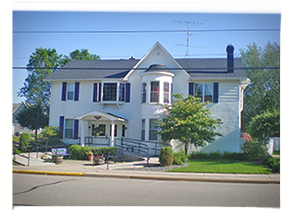
Loyal, Wisconsin
201 West Mill Street
P.O. Box 65 • Loyal, WI 54446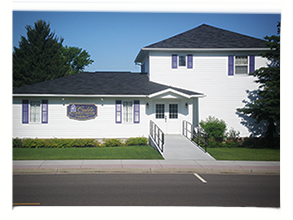
Greenwood, Wisconsin
103 North Main St.
P.O. Box 42 • Greenwood, WI 54437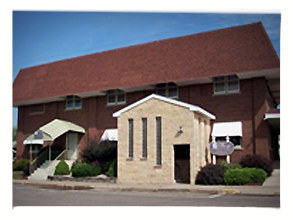
Thorp, Wisconsin
110 West School St.
P.O. Box 354 • Thorp, WI 54771